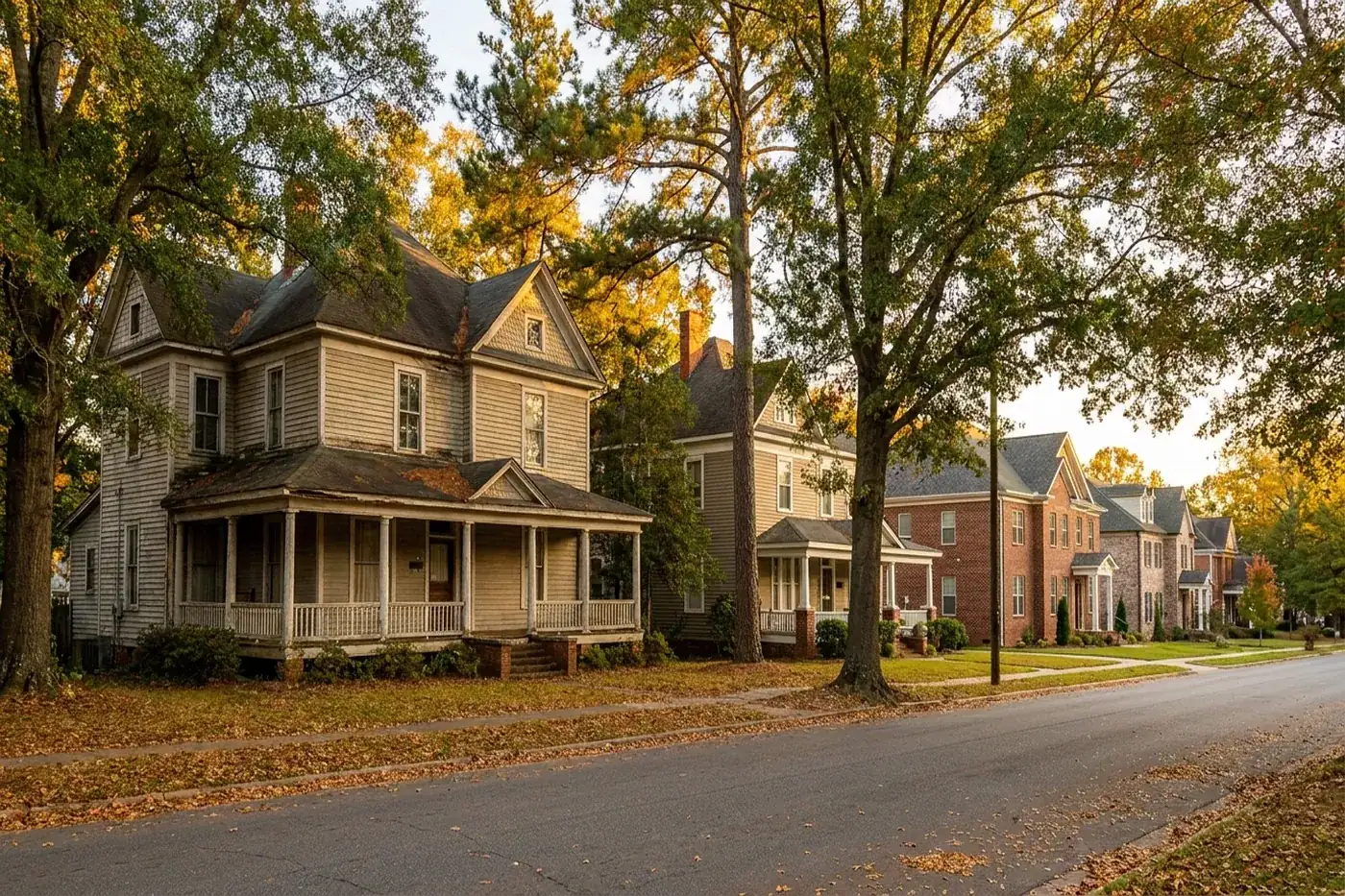
Crawl space encapsulation in Concord costs $6,000–$15,000 and converts a vented, chronically damp crawl into a closed, dry one. It's the approach North Carolina's field research validated for exactly this climate — roughly 43–45 inches of rain a year over red clay that drains slowly.
What the science says, what the install involves stage by stage, and what moves the price.
The North Carolina evidence behind closed crawls
This state didn't adopt encapsulation on faith. Researchers here instrumented real houses in the 2000s — sealed some crawls, left others vented, and measured. The closed crawls held dramatically lower moisture through the humid months while the vented ones cycled damp with every front. That work moved national practice and put explicit closed-crawl provisions into the NC Residential Code. When we seal a Concord crawl, we're installing the system this climate already voted for.
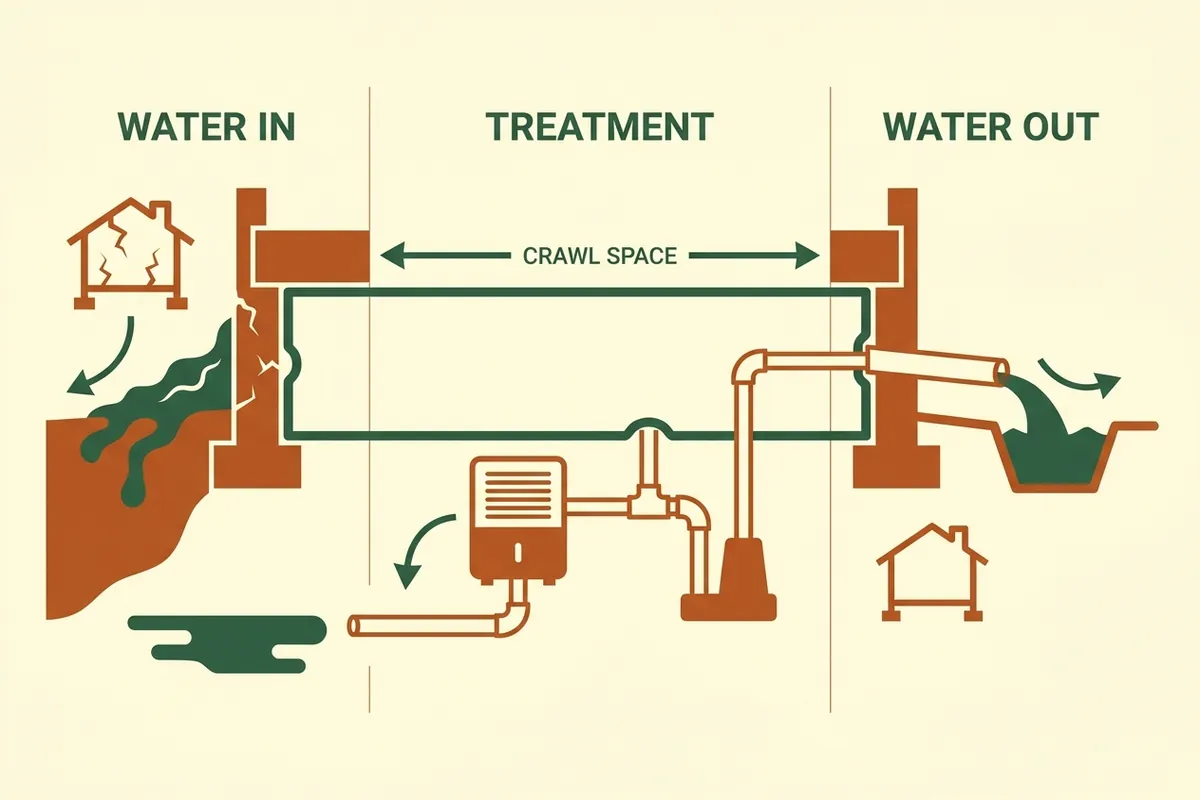
The install, in the order that makes it last
- Inspection — free, photographed, with moisture readings and a structural look
- Water management — drainage or sump work first wherever storm water reaches the crawl
- Remediation — mold treated, weakened framing repaired, never sealed over
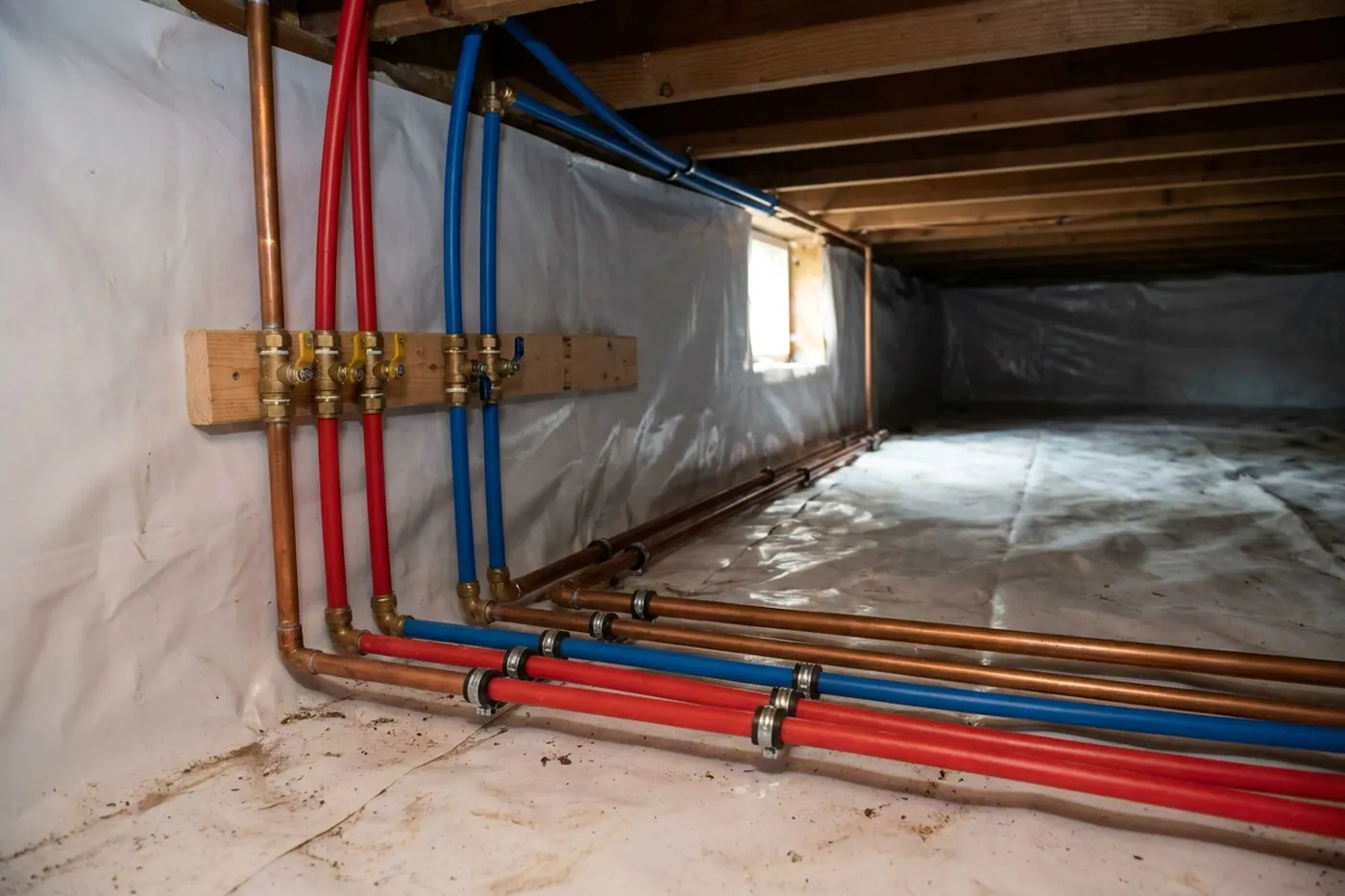
- Sealing — reinforced liner across ground and walls, seams taped, piers wrapped, vents closed
- Drying — a crawl-rated dehumidifier sized to the cubic footage, draining automatically
- Commissioning — verified readings and a photo set of the finished space
Price drivers, plainly
| Driver | Why it matters |
|---|---|
| Storm water in the crawl | Adds the drainage/sump stage before sealing |
| Square footage & clearance | Liner area and working speed |
| Framing condition | Mill-era and older homes often need repairs first |
| Pier count and layout | Every pier is wrapped and sealed individually |
| Dehumidifier sizing | Matched to volume and moisture load, not one-size |
Quotes are written and itemized by stage, with your crawl's readings attached — and honored as written.
Frequently asked questions
Why is it called a 'closed crawl space' in North Carolina?
That's the term the state's own research and code use — a crawl with sealed ground and walls, closed vents, and mechanical drying. NC field studies in the 2000s compared closed crawls against vented ones in this climate and the closed spaces stayed dramatically drier. Encapsulation is the installation of that system.
What lands a Concord home at the top of the $6,000-$15,000 range?
Water. Crawls that take storm runoff need drainage and a sump before sealing, and that stage carries $2,000-$5,000 of the spread. Size, repairs, and access make up the rest. Dry crawls with clean framing land at the bottom.
Can mill-village homes on brick piers be encapsulated?
Yes — pier crawls seal well, each pier wrapped and taped into the liner. The extra consideration in Kannapolis and China Grove era homes is framing condition: a century of vented humidity means we inspect sills closely first and repair before sealing.
What happens to my vents and foundation openings?
They're closed and air-sealed — that's the design. NC code permits it with a proper vapor barrier and a drying mechanism in place, which is exactly what the system installs.
How do I know the system is actually working?
Humidity readings at commissioning, photos of the finished space, and — the part homeowners notice — the musty smell leaving the house within days. A closed crawl holds steady where a vented one swings with every weather front.
Get a free Concord crawl space inspection
Tell us what you're noticing — smells, humidity, floor bounce, a wet crawl — and we'll schedule an inspection with photos of what we find. We reply the same business day.